정교한 Notion 커스텀 에이전트 협업으로 세계적 수준의 IT 헬프데스크를 구축한 Remote
Remote는 지식과 프로젝트, 팀까지 이미 모두 Notion을 중심으로 운영하고 있습니다. 이제는 여러 에이전트를 활용해 IT 지원 요청까지 관리합니다. 에이전트가 자동으로 요청을 처리하며 중요한 순간에는 담당팀을 연결해 줍니다. IT팀은 AI 크레딧 비용을 7% 줄이면서도 지원 역량을 확장할 수 있게 되었습니다.
A higher bar for IT: end-user experience
Remote is a fast-growing global payroll company with a team that’s fully global itself—so the company treats speed, clarity, and self-serve access to information as nonnegotiable. But as it scaled across dozens of countries, the cost of “waiting for answers” scaled with it. The knowledge existed, but finding it (or getting the right person to respond) slowed teams down.
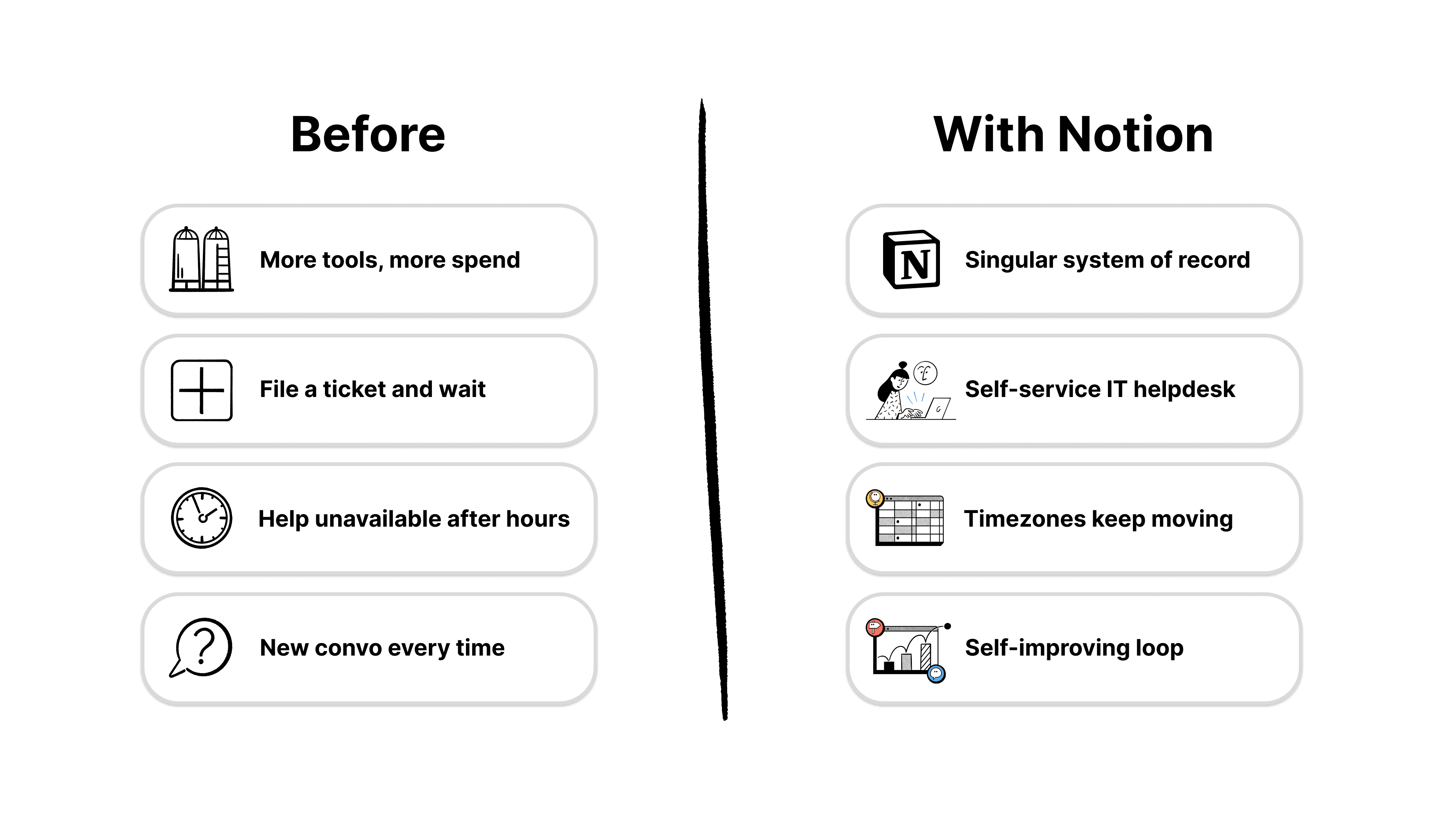
Since day one, Remote chose Notion as the home for all company knowledge. The team consolidated tools, kept context fresh, and saved over half a million dollars per year. But a single source of truth was only the starting point.
Today, Remote treats Notion as more than a wiki. It’s where critical business processes actually run, starting with an agent-enabled IT help desk that makes support feel fast, consistent, and human, even at scale. Now, roughly 1 in 4 resolved IT tickets are handled end-to-end by AI.
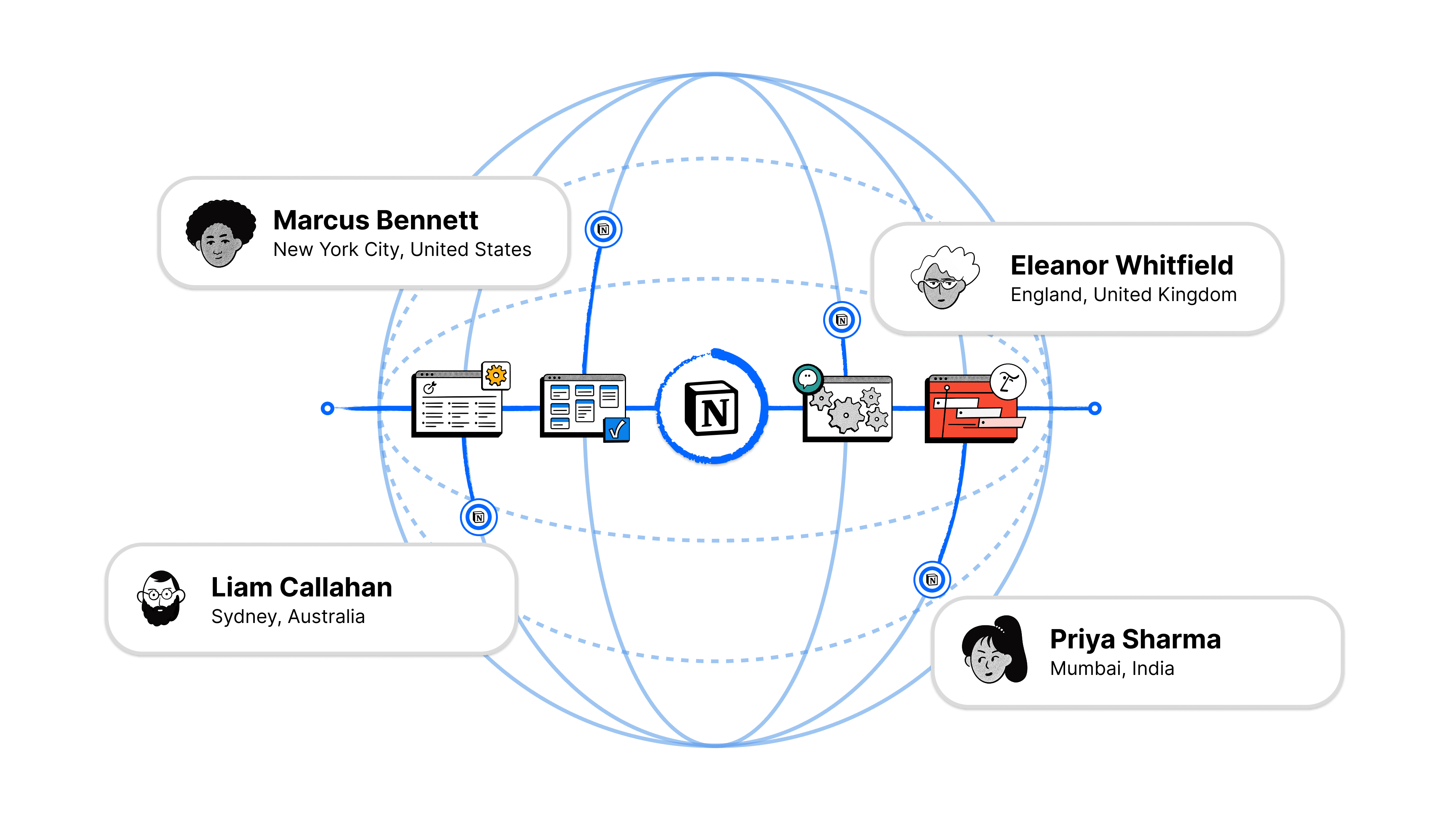
We’re fully remote and async. Notion started as knowledge management, but it’s become our HQ.

Slack에서 운영되고 Notion에 기반을 둔 헬프데스크
검색 문제가 해결되자 James는 다음 병목 지점을 해결하는 데 집중했습니다. IT 지원 요청은 단순한 질문이 아니라 그에 따른 조치나 우선순위 판단, 후속 처리가 필요한 경우가 많습니다. Remote에 필요했던 것은 직원 각자의 업무 흐름을 방해하지 않으면서도 지원 업무의 전체 과정을 처음부터 끝까지 관리할 수 있는 시스템이었습니다.
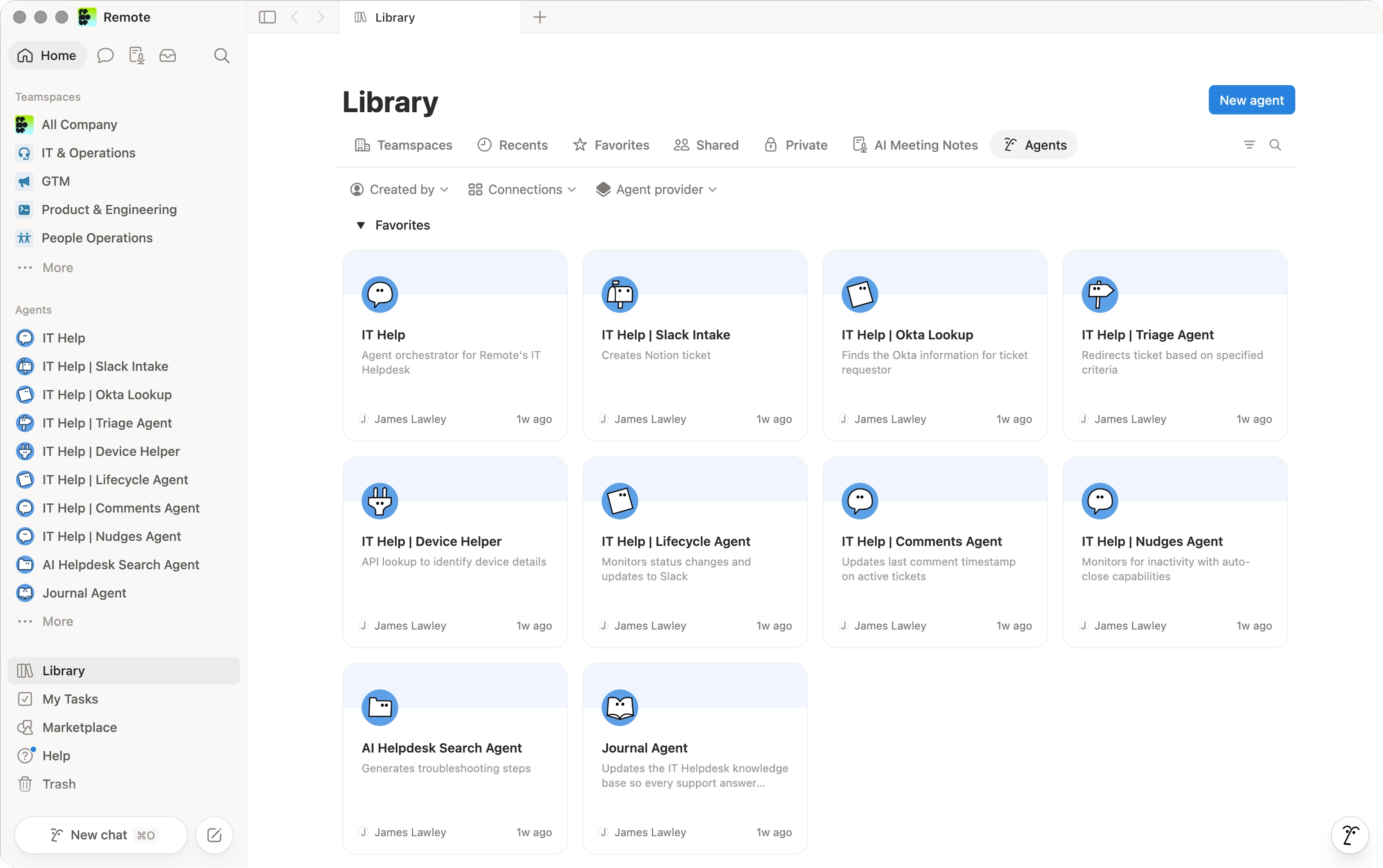
James가 찾은 해결책은 여러 커스텀 에이전트phrase-md-link-separatorhttps://www.notion.com/product/agents가 유기적으로 협업하는 시스템입니다. 복잡하고 순차적인 흐름으로 사람이 모든 작업을 처리하던 기존 방식을 대체하는 것이 목표였죠. 즉, 하나의 ‘만능 에이전트'를 만드는 것이 아니라, 역할이 명확하고 세밀하게 통제되는 전문 에이전트로 팀을 구성하는 것이었습니다. 에이전트 하나로 모든 일을 처리하면 시스템이 금세 복잡해지고 예측도 어려워지기 때문입니다.
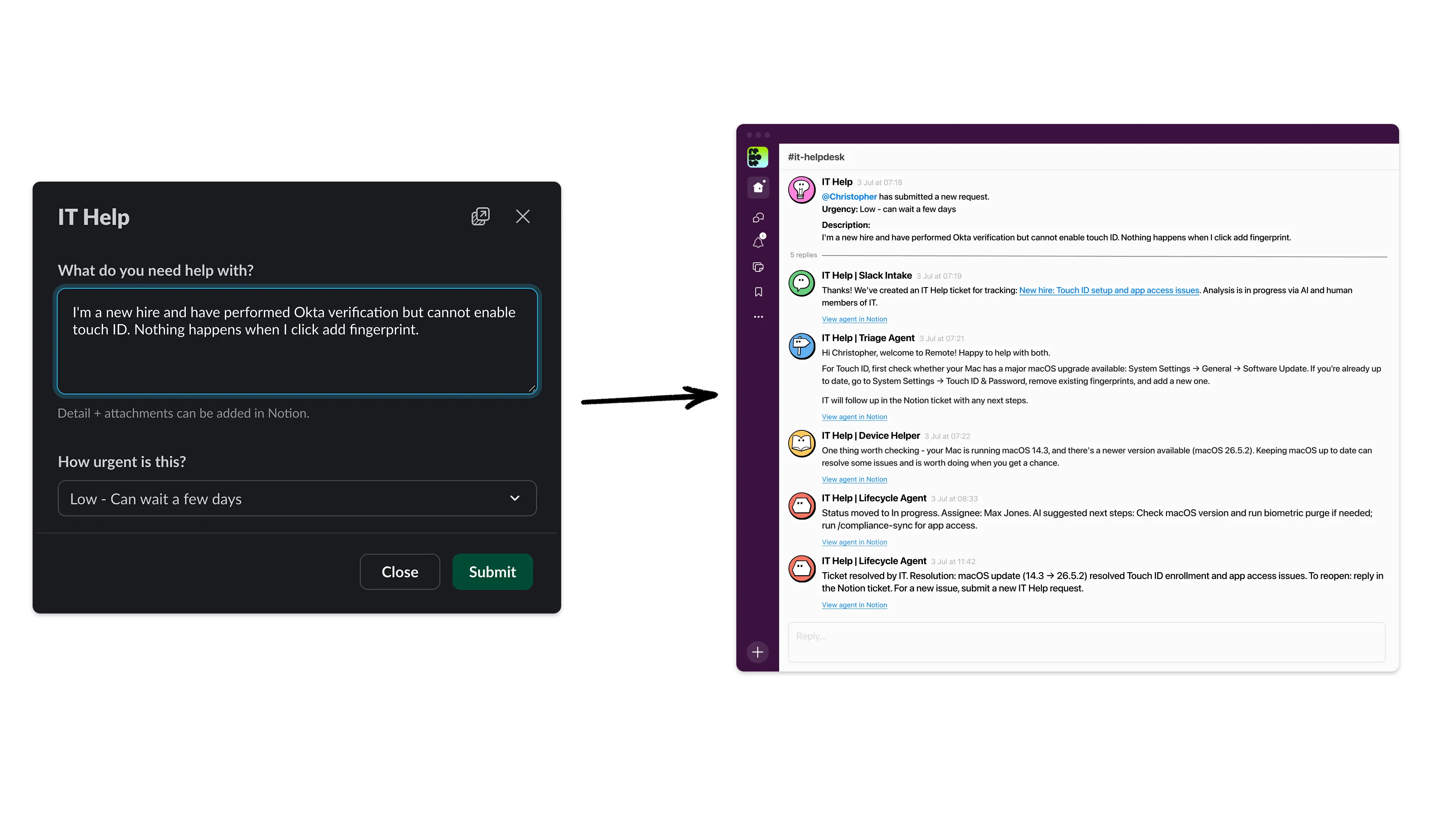
현재 Remote의 지원 프로세스는 직원들이 이미 일상적으로 사용하는 Slack에서 시작됩니다. 이모지 반응과 같은 간단한 방식으로 요청 접수가 시작되며, 접수 단계에서 사용자가 직접 설명한 문제 상황과 요청 처리에 필요한 메타데이터가 함께 수집됩니다. 이후에는 에이전트 시스템이 넘겨받아 처리합니다.
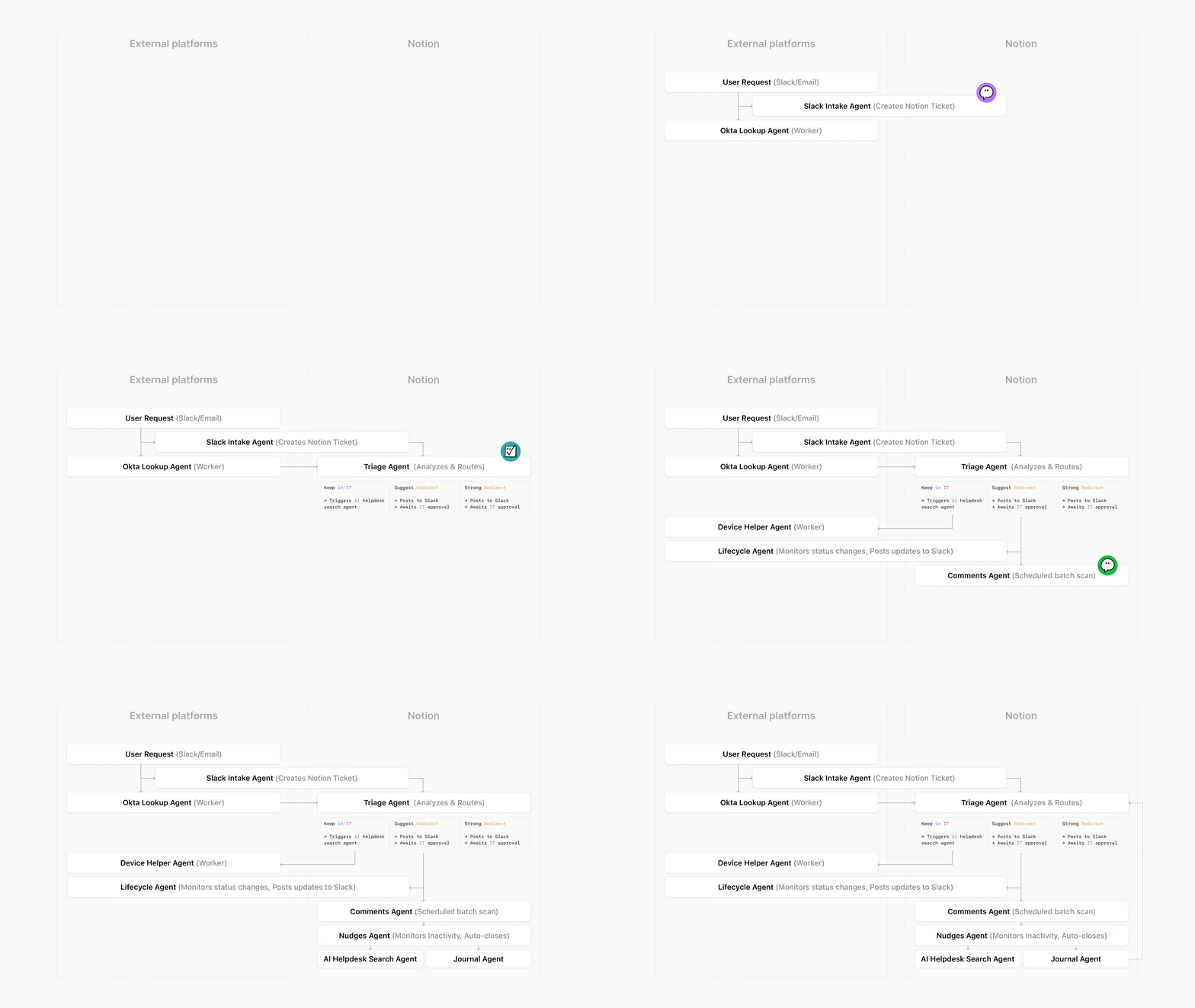
Agent roles: Like an IT team, but automated
What happens next looks less like a bot answering questions and more like an IT team running a playbook—only the roles are automated.
Intake and creating tickets. This Slack-triggered intake agent captures the issue in plain text and creates a ticket in Notion, enriched with structured fields like priority, team/department, and a link back to the original thread. When necessary, the agent can also pull core user context via a read-only Worker integration for Okta to improve routing and reporting.
Triage. Another agent acts like the front line: it checks whether the request belongs with IT or should be redirected to another team, then searches across the knowledge base, historic tickets, Slack context, and the web (when needed) to propose a diagnosis and next steps. In Remote’s setup, this process includes explicit confidence: the agent rates how sure it is, and can auto-approve certain decisions above a threshold—keeping humans in the loop where it matters most.
Device-specific help. When triage suspects a device problem, a specialized device-helper agent can pull details like the model, OS version, and last reboot time from Kandji, then return targeted guidance to the same Slack thread.
Follow-up and closure. Support isn’t just diagnosis, so a nudges agent runs daily, checking for tickets with no activity in 72 hours, prompting the requester, and auto-closing after repeated nudges—saving hours of manual “just checking in” work each week.
From “we never taught it that” to a self-improving system
“We never taught it that—it’s not in the knowledge base.” James hears versions of that reaction often. Remote’s IT knowledge base remains the source of truth in Notion, but its agents now keep a private working journal alongside it—capturing new patterns, using repeated outcomes to improve triage, and moving the most useful fixes back into the main knowledge base. It’s the kind of self-improvement loop that James says “sparks joy when the agent saves us time later by self-solving a ticket.”
Throughout these interactions, the agent system is intentionally “human” in tone. James found that overly prescriptive instructions weren’t the answer; giving agents the freedom to “vibe” produced clearer, more helpful responses—and sometimes delightful ones, as when an agent congratulated someone on a promotion while still solving their problem.
The agents don't replace us, they scale our standards. We set the bar and they help us hold it for everyone, every time.
“Humans + agents”: not replacement, but standards at scale
At Remote, humans set the bar for AI, defining escalation paths, maintaining the knowledge base, refining instructions, and designing the guardrails that make automation trustworthy. What’s left over is execution: routing, retrieval, first-pass resolution, and consistent follow-through.
While 1 in 4 IT requests are fully resolved by agents from end-to-end, the rest are still supported by AI—for example, through ticket triage. This means the team can step in once the admin work is done and quickly carry the request over the finish line.
That human ownership shows up in how the system is built and maintained. James used AI to help write and refine instructions, but tested carefully—iterating in controlled environments with real ticket text and tuning for the right balance of structure and flexibility. The result is a support experience that’s faster for employees and more sustainable for IT.
Measuring impact—and what’s next
Remote has seen a growing share of tickets resolved with significant agent involvement—whether that’s full resolutions or workflows that still require explicit human input. And because the system runs in Notion, Remote can keep improving it: updating instructions, refining routing, and enriching tickets with additional context.
Over the first few months, AI resolutions grew ~35% while overall ticket volume stayed flat, meaning AI is genuinely taking more work off the team's plate. Plus, the AI is getting more efficient by iterating on its own instructions, consuming 35% fewer credits and 7% less spend compared to its initial launch month.
Looking ahead, Remote is already experimenting with Workers that pull read-only context from other systems like Okta. The long-term direction is clear: carefully expand what automated systems can do while keeping humans in control of the outcomes and the standards.
Remote already ran its knowledge, processes, and team in Notion—so as IT requests scaled, they built an agent-powered help desk right where employees work. It keeps every request tied to the right context and moves tickets from intake to triage to follow‑up, bringing humans in only when needed.
When you have this huge amount of knowledge and context living in Notion, and it integrates with Slack too, it's basically priceless.