How Little Plains runs a modern agency on Notion
Little Plains believes great work comes from curiosity, taste, and shared context: the client’s vision, the audience’s needs, the references that shape the work, and the systems that keep it moving. In Notion, that context becomes the foundation for people and agents to create faster without lowering the bar.
How Little Plains runs a modern agency on Notion
Little Plains is the latest studio from Emmett Shine, the founder of Gin Lane, the agency behind some of the most recognizable direct-to-consumer brands of the 2010s. With Little Plains, he’s building a team that brings the same instinct for taste, story, and digital craft to companies building in a new era of AI.
The studio builds brands, websites, product interfaces, and AI-powered tools for early-stage companies. A project might start with a conversation with a founder, then grow into a strategy deck, a proposal microsite, a launch plan, and the internal systems that help the client keep building after launch.
Even—or especially—when the work involves AI, Little Plains starts with deep human understanding. Everyone on the project needs to know what a client is trying to make, who they are trying to reach, and what will make the audience feel seen before the team—or the AI tools they use—can make something useful.
Notion is the information nerve center of Little Plains. It’s the source of truth for our back office, as well as the basis for the creative work we deliver.
Notion is the backbone for creative production
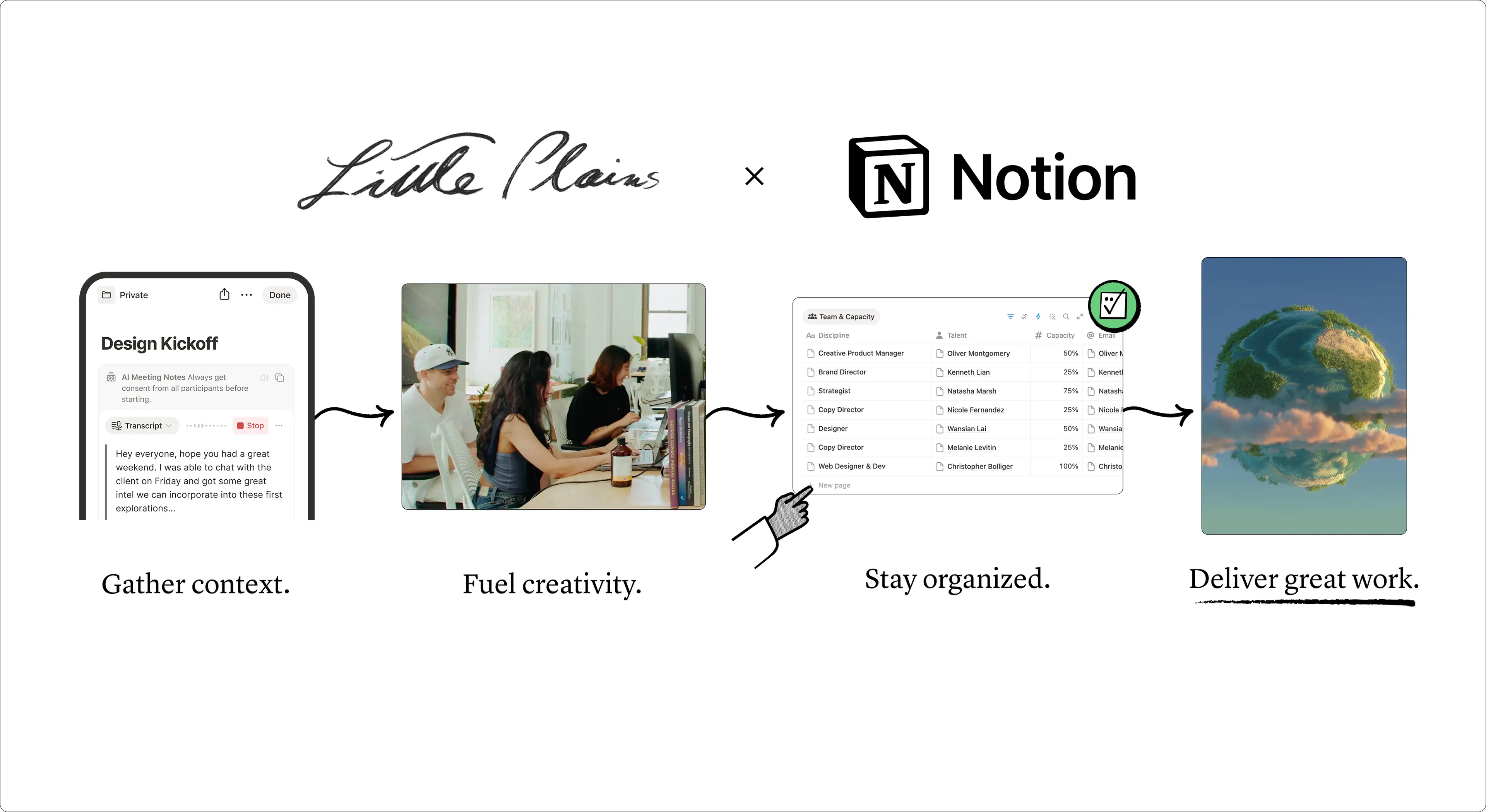
Notion doesn’t just store context, it gives Little Plains a shared memory for the work. Each client has a project home in Notion where the team keeps briefs, goals, AI Meeting Notes, decisions, and open questions, so everyone can see not just what needs to happen next, but why it matters.
In creative production, hand-offs are where good ideas can start to lose their shape. A project might move from strategy to design, from internal review to client feedback, or from Figma and Flora back into Notion. Keeping the work anchored in one place helps the team preserve the original creative intent as more people, tools, and decisions enter the process.
Notion powers the agency’s back-office work, too
For Little Plains, the administrative side of the agency matters because it creates more room for the creative work they care about most. Finance, business development, and recruiting all run in Notion, so the team can spend less energy chasing information and more energy on craft.
A recruiting process that can handle a viral post
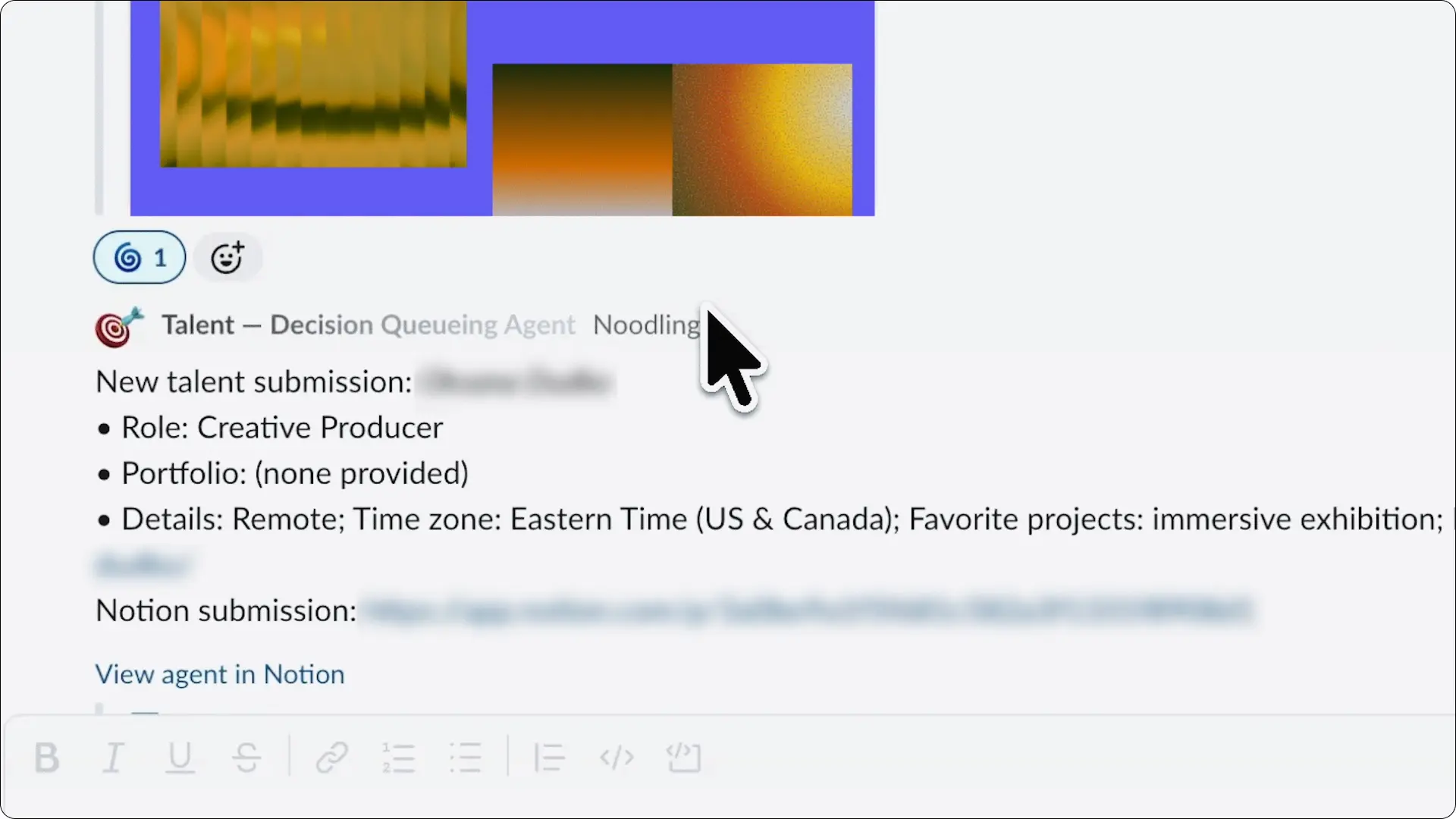
Applicants share their role, portfolio, availability, timezone, and interests. A Notion agent sends the submission into Slack, where anyone from leadership can review it and react with their custom emoji. The agent then drafts an email with that leader’s calendar link and updates the master talent database.
When a Little Plains talent post went viral, that system kept the process manageable. The post reached a quarter-million people and brought thousands of applications into Slack and Notion. Without Notion and agents, said Alex, “this would have been completely unmanageable.”
Better client proposals in a fraction of the time
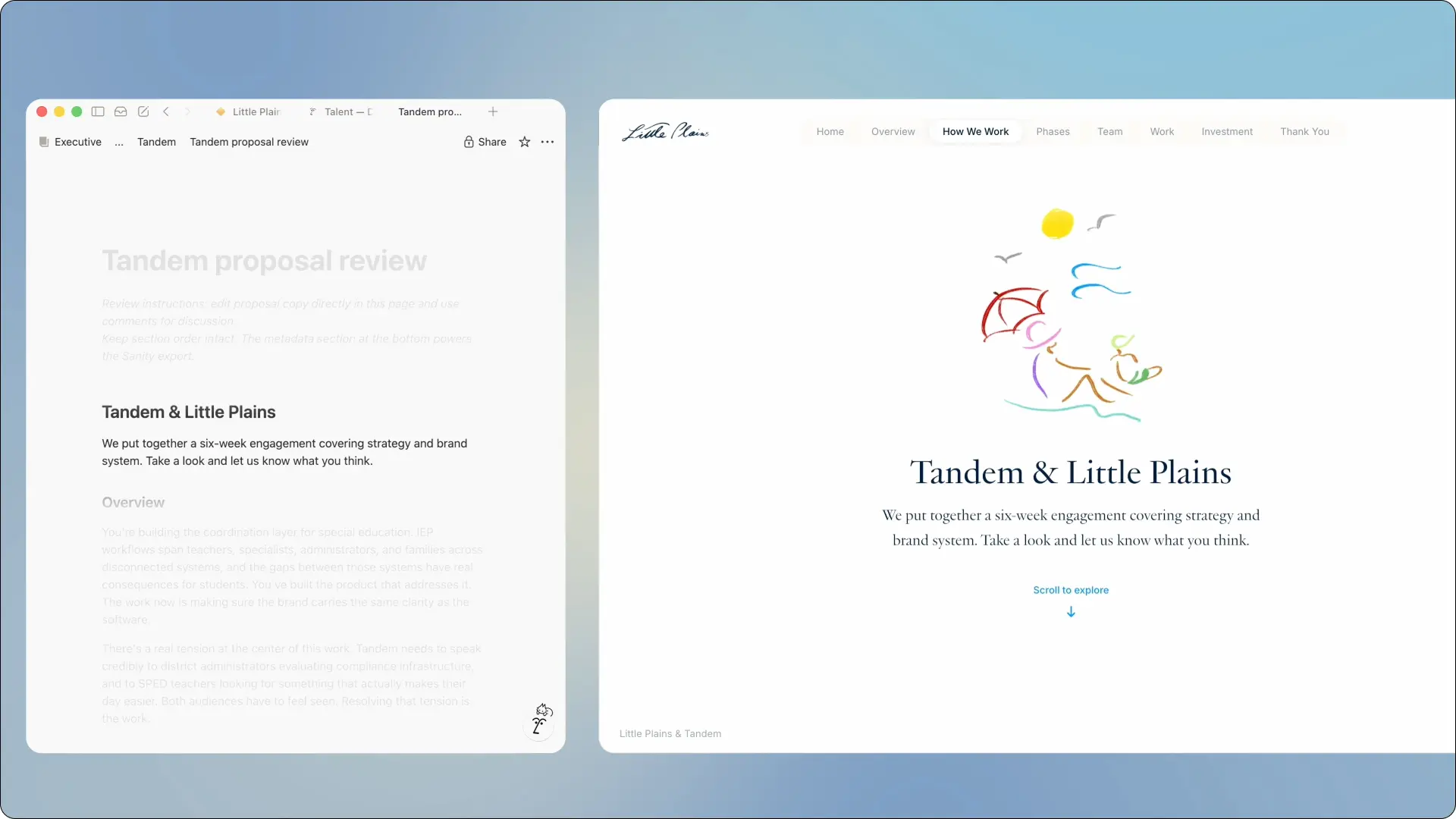
AI Meeting Notes preserve what was discussed so the team can bring client context into the proposal without rebuilding it from memory. From there, the team reviews the story, scope, timeline, and budget in Notion. Once approved, that content powers a polished client-facing microsite.
“Notion acts as an intelligent CMS that drives the entire back end of our new-business proposals,” said Alex Leiphart, Head of Product. “From that back end, we’re able to deliver this beautiful, interactive front end that wows clients time and time again.”
Making AI experimentation a team habit
Curiosity is part of how Little Plains works, so the team wants everyone—not just the technically inclined—to explore what AI can help them do. But experimentation needs structure if it is going to improve the work rather than create more noise.
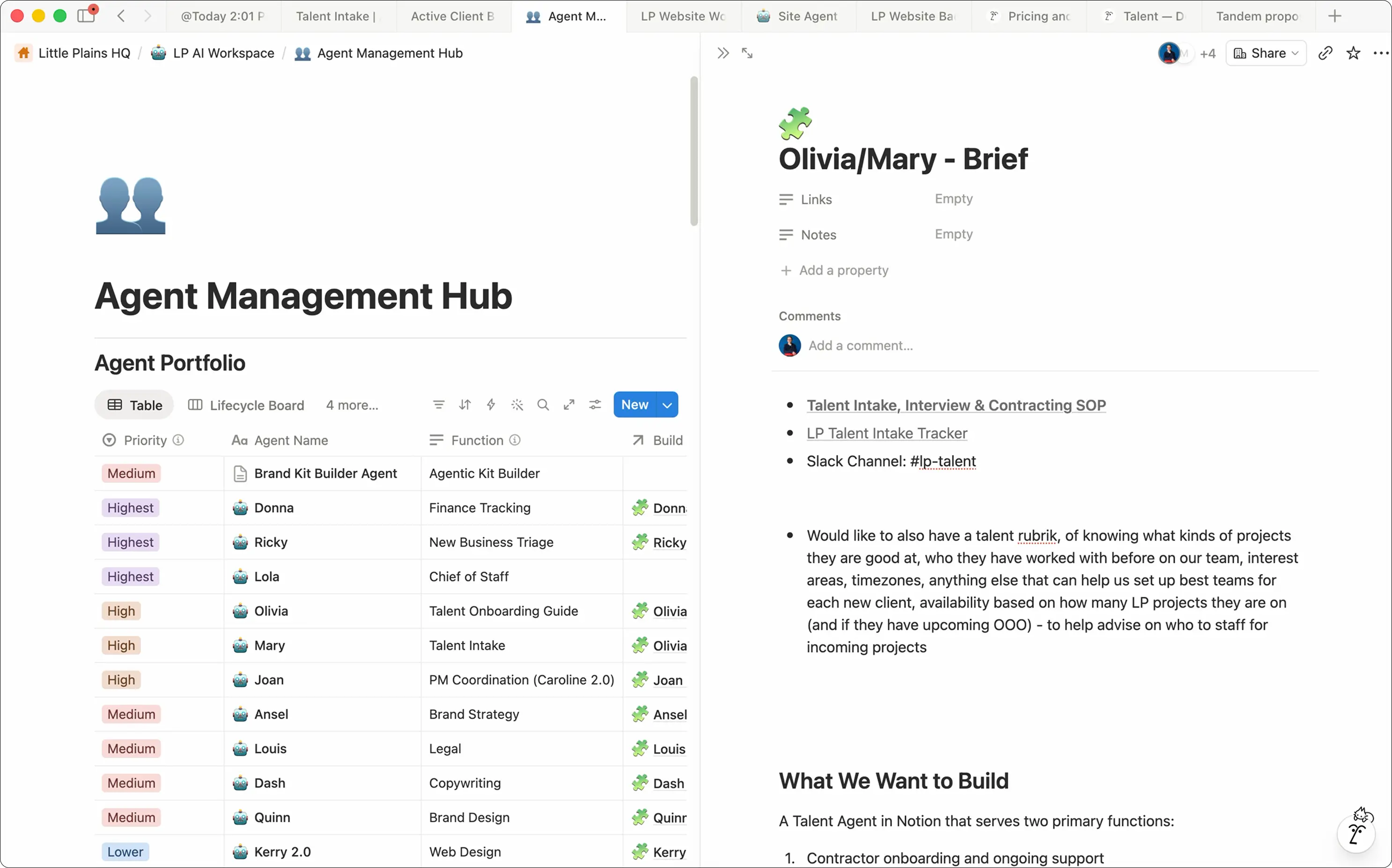
Before anyone builds an agent, they write down what it should help with, how it should work, what information it can use, and where a person needs to stay in control. Little Plains keeps those briefs and agents in a Notion hub, so the whole team can see what is being built, why it matters, and who is involved.
That makes the work easier to understand and improve. The hub also helps the team spot when two people are solving the same problem or when an agent needs clearer direction.
We really want to encourage our team to explore these new agency tools. It’s very exciting. But we also want to provide structure and guardrails to make sure this is a sustainable workstream.

Move faster, keep the taste
Little Plains is not using Notion and AI to replace creative judgment. The goal is to protect the time and attention that creative work needs: less hunting for information, less manual coordination, and more room for people to think.
“I don’t do slop,” Emmett says. “I didn’t do slop when I was working only with people, and I don’t do slop when I’m working with people and assistive tools and technologies.”
For a modern agency, shared understanding is how curiosity turns into better work. In Notion, the team, its projects, and its AI tools all start from the same briefs and decisions. That helps Little Plains move faster, explore more, and protect the taste that makes the work worth doing.