Brainlabs’ Get Stuff Done system: Custom Agents that execute while you focus on deep work
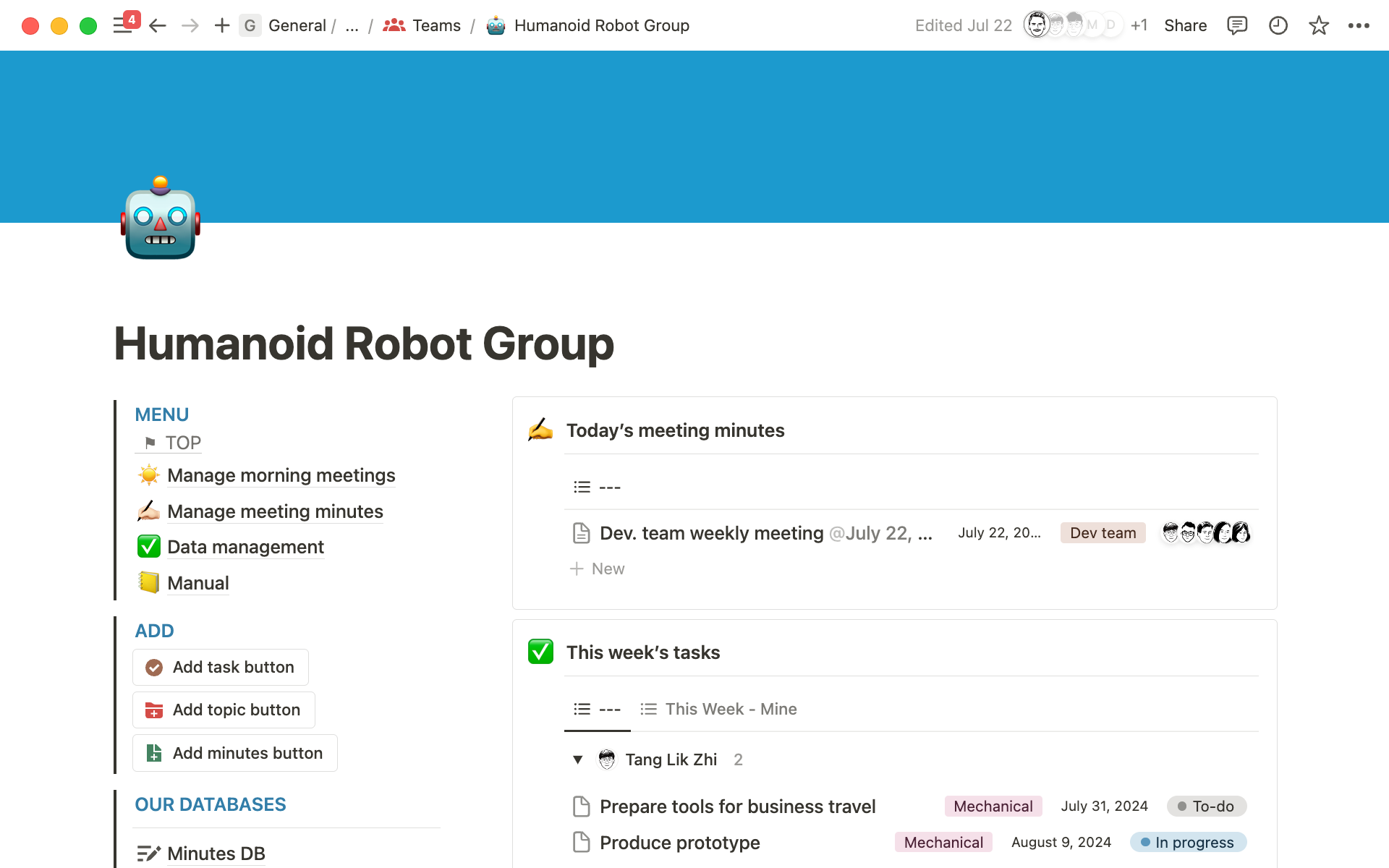
Brainlabs built a system in Notion where meeting notes become tasks, and tasks get routed to custom agents that keep working in the background. Workers make the actions reliable, and Cortex-connected tools can pull insights and push results back into the workspace.
From API calls to agents that keep working
Somewhere in Glasgow, Josh Reid is probably sitting in a meeting right now.
His meeting notes are being generated without him typing a word. Those notes are then turned into tasks, those tasks are routed to agents based on their capabilities, and those agents are completing the work – all before his conversation ends.
“By the time this meeting finishes and I go make a cup of tea,” says Josh, principal engineer at Brainlabs, “all those tasks are already done for me in the background”.
Getting to that moment took years though.
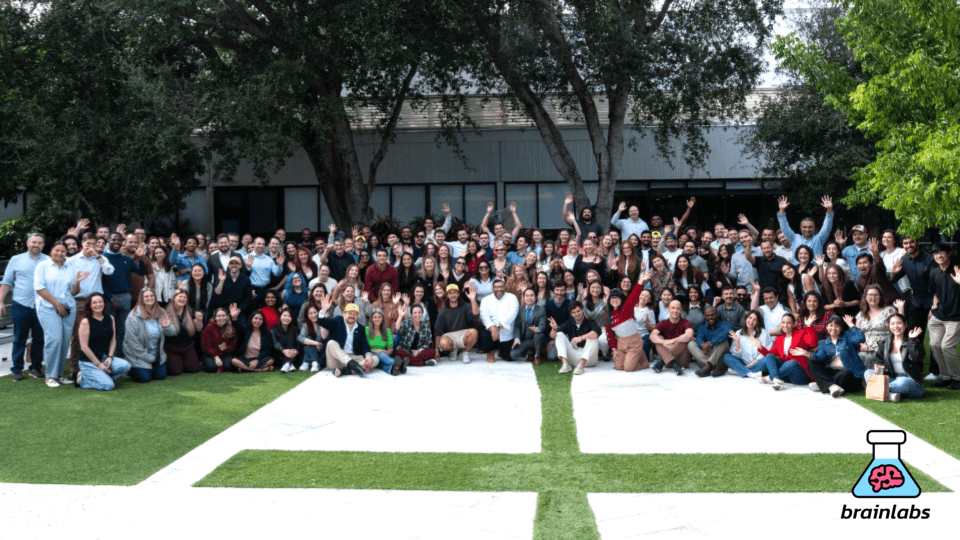
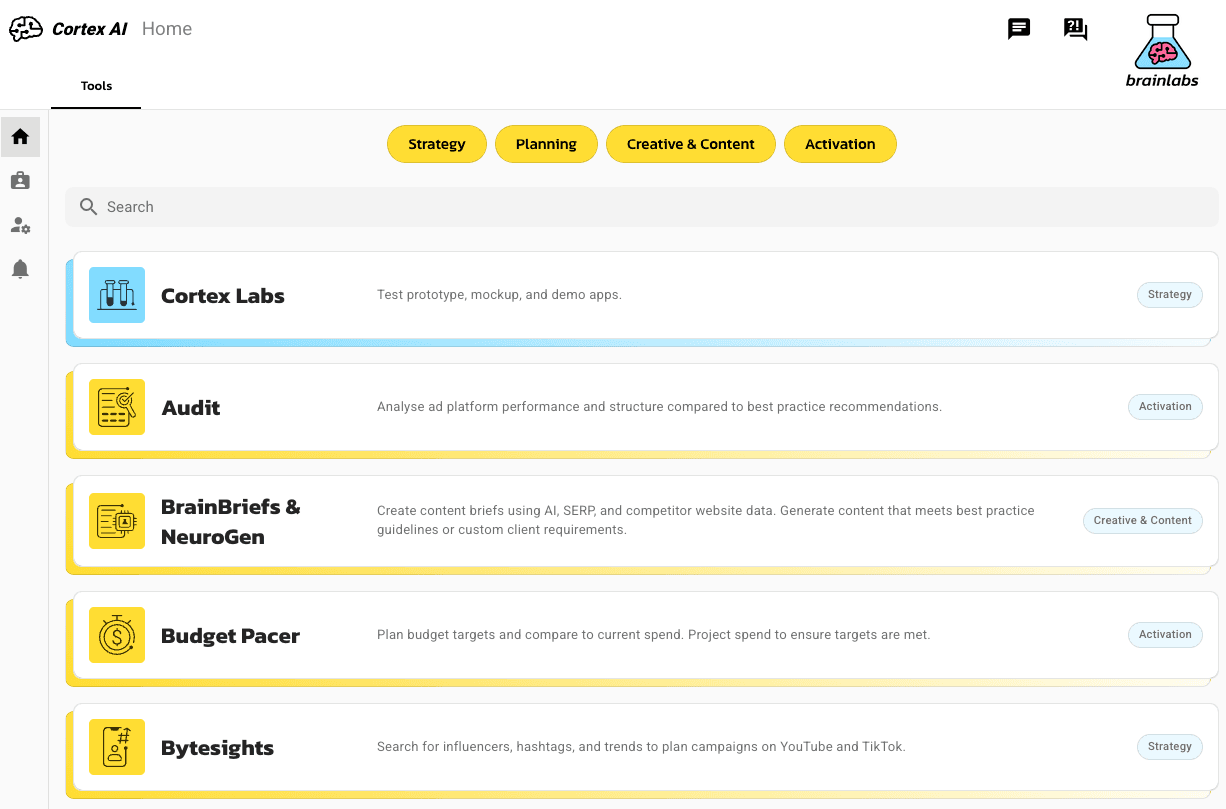
Brainlabs is an international media agency managing campaigns for 500+ clients. Our engineering team is small by design: tight-knit, building best-in-class tools in-house that don’t exist anywhere else. That includes an internal platform called Cortex, which is a suite of proprietary tools their client teams use to optimise budgets, audit accounts and manage campaign setup across every major ad platform.
When LLMs arrived, Josh’s team layered them into Cortex quickly. But there was a gap: A tool that took a task, disappeared for a while and returned an answer wasn’t really an agent. “I’m sending a task off to something and it’s doing it in the background,” Josh says. “But that can often just be a very delayed return on an API call.” A real agent goes off, works, surfaces a question, waits for an answer and keeps going – all while you’ve already moved on to something else.
Brainlabs got there. But only once Notion was in the picture.
Notion as the layer on top
Their internal platform is powerful, but its outputs had always been siloed – readable by whoever ran the tool, invisible to everyone and everything else. As Notion became Brainlabs’ visibility layer for the entire company, Josh realised it could also be the interface that made Cortex’s work useful beyond the tool.
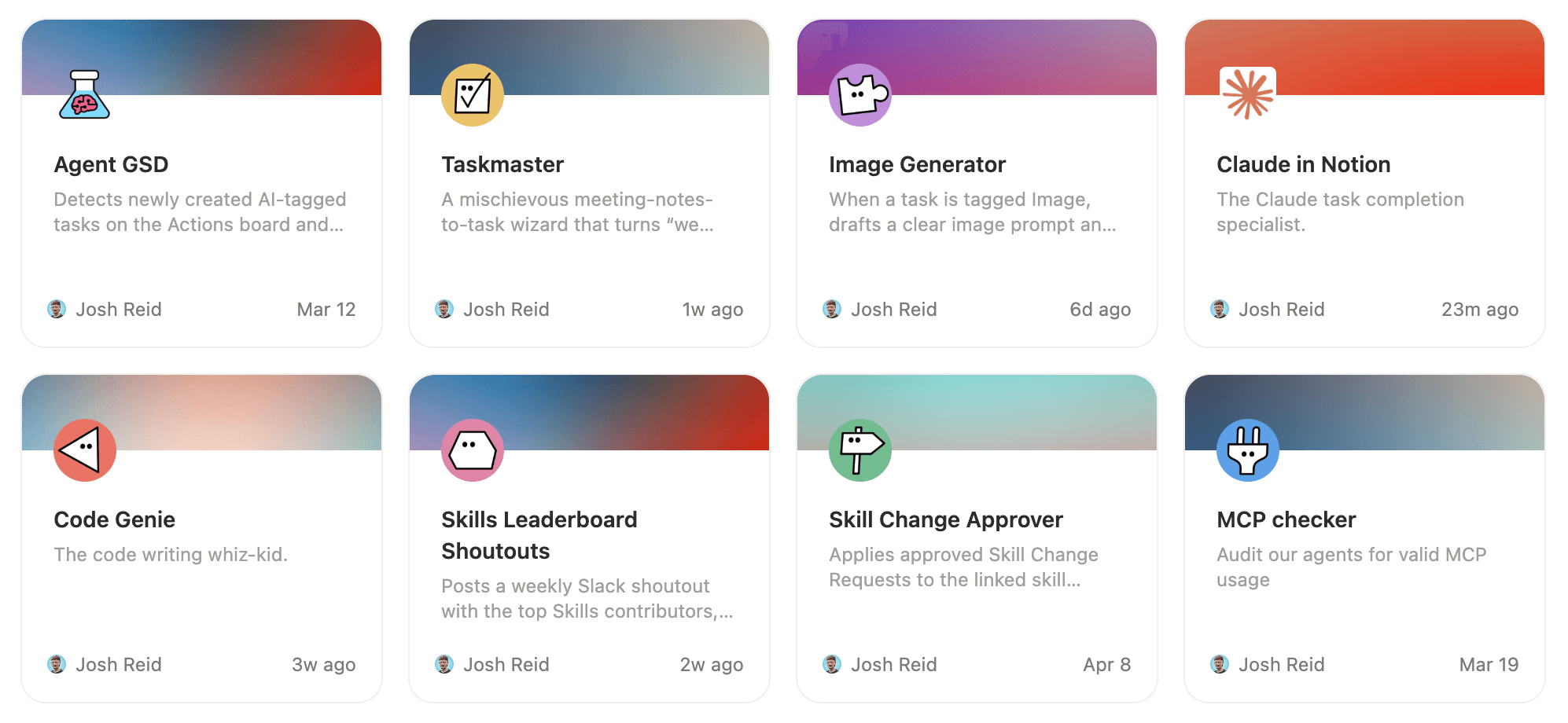
Client onboarding was the first proof point. It’s the first building block of what Brainlabs calls Get Stuff Done – a system of Notion Custom Agents that picks up action items across the company and starts processing them automatically.
Every new client means a long checklist of setup tasks: Accounts configured, platforms connected, budgets mapped. Before, that task list was spread across the various tools built in Cortex, so it still required someone to manage the process. Instead, Josh built an agent to handle it. Now, when a client gets created in Notion, the agent reads the page, spins up a database of tasks, and starts completing them – all before the account team has touched anything.
A “pull request” workflow for non-developers
Notion has become the interface that makes complex systems accessible – and the same logic drove the skills infrastructure Josh built for Claude.
Brainlabs wanted employees across every job function and region to be able to develop and share Claude skills, all without requiring anyone to touch a terminal. So Josh built a PR-style review system in Notion. Employees submit skills, an agent formats and categorises them, approvers review in Notion, then everything is pushed to GitHub and back into Claude automatically.
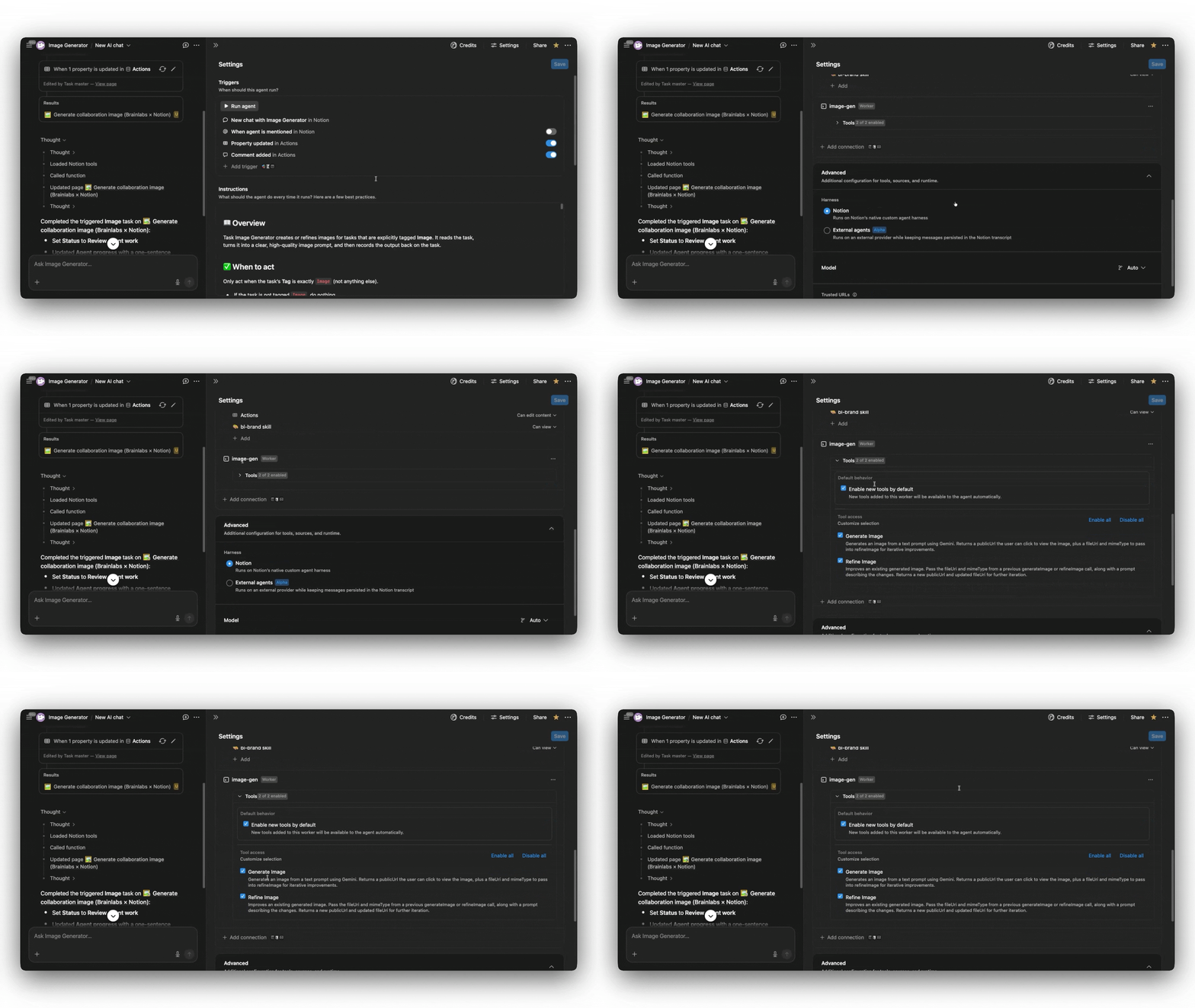
Agents are probabilistic by nature, but that doesn’t always work when a task needs to execute exactly right. Workers solved that. Now Josh can write a JavaScript function that defines exactly how an action – like firing a Slack message or calling an image API – should execute and hand it to an agent as a tool. The agent reasons about when to use it; the function handles the execution deterministically.
The image generation agent shows the full system working together. A task comes in: Create a LinkedIn graphic for an upcoming campaign. The agent picks it up, generates two or three options using a Worker that calls an image API, and drops them into a Notion page for review. It already knows Brainlabs’ brand colours, logo and typography too, because the agent has access to the brand guidelines that already live in Notion.
Josh says Workers make things “a breeze”. And he can build them while barely writing a line of code directly – he just tells Claude what he needs.
Replacing busywork, not people
Josh is direct about what this is all for. It’s not about headcount: It’s about the removal of busywork to focus on being strategic.
“There’s probably only 30% of your day where you do the work you’re meant to do in your job in the first place,” he says. “The other 70% is dealing with the side products of that work.” The goal is to let agents handle that 70% – the repeatable, time-consuming, busywork – so the 30% gets Brainlabs’ full attention.
The architecture Josh built around Notion is what makes that possible. Skills, knowledge bases, task history – all the context an agent needs lives in Notion, no matter the model or platform running underneath.
“If we decide to up and shift over to a different LLM,” Josh says, “all of our sources of information still connect to the same place: Notion”.
So every day, while Josh finishes up his meetings and makes his cup of tea, somewhere in the background, work is already done.