How Unspun coordinates humans, agents, and microfactory machines in Notion
Unspun is rebuilding fashion around a different promise: clothing made on demand in local microfactories, closer to when and where it’s needed. To make that model competitive with a fast, forecast-driven supply chain, every machine run has to stay connected to the people and decisions behind it. In Notion, Unspun coordinates that microfactory operation with Custom Agents that help keep production moving.
Unspun is taking on one of fashion’s messiest problems
Fashion has an overproduction problem.
Brands forecast demand months ahead, produce at scale, and move fast by making inventory before anyone has asked for it. When those guesses are wrong, the cost shows up as unsold garments, destroyed product, and carbon spent making clothes no one wears.
“The clothing industry today produces well over 100 billion garments a year,” says Beth Espinette, cofounder and CPO of Unspun. “It’s mass-produced with only the hope that it sells.”
Unspun is building a different model: clothing made on demand in local microfactories, closer to when and where people need it. But on-demand manufacturing only works if the operation can move in days, not weeks or months. A customer signal has to become a garment quickly.
That is where Notion comes in. Unspun uses Notion to keep the people, machines, materials, customer context, and production decisions connected as work moves from customer demand to custom-fit pants.
On-demand manufacturing depends on airtight collaboration between people and machines
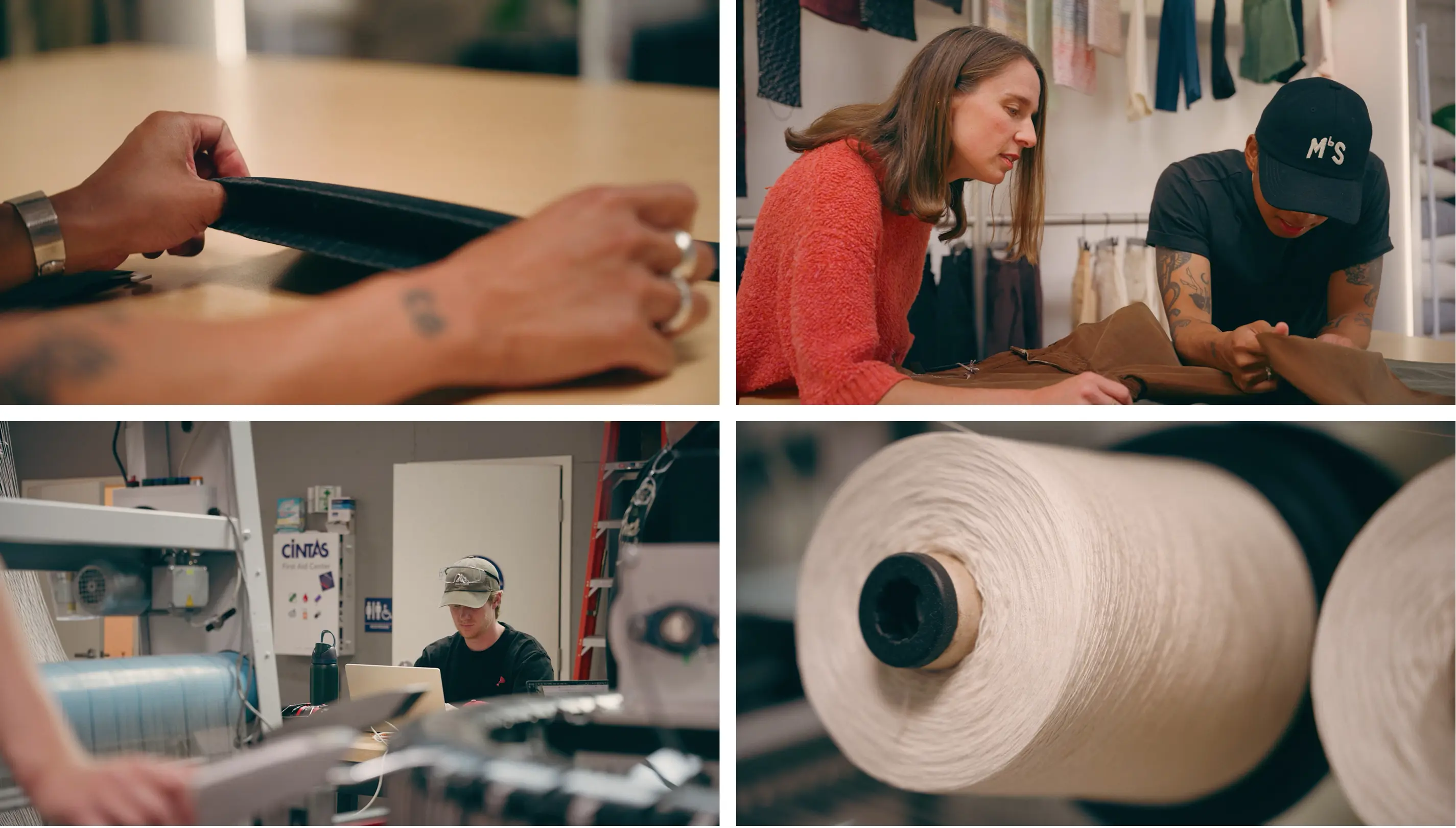
Apparel production requires a long chain of work: design, sourcing, sampling, production, finishing, and quality checks. Unspun is compressing more of that work into one machine. It’s more efficient, but also requires more upfront organization:
Customer requirements → machine files: A brand sends a tech pack, spec sheet, or mood board. Unspun translates that 2D idea into a 3D file the machine can read.
Materials → test plans: Yarn arrives from a vendor, then gets tested, documented, and matched to the run it will be used for.
Machine settings → production output: Hardware teams track what parts are on the machine, what changed, what test is running, and who is operating it.
Output → quality data: Textile teams inspect what comes off the machine, tracking yarn quality, measurements, shrinkage, and whether the result meets the customer’s requirements.
Results → next decision: Each run becomes context for the next one: what worked, what failed, what needs to change, and what should be scheduled next.
That work is too complex to manage in scattered docs or one-off conversations, so it all lives in Notion. The file, test plan, machine run, quality log, customer requirement, meeting transcript, and next steps can stay connected. Jeremiah Givens, Digital Operations Manager, describes Notion as “the core of our tech stack,” the place where all that context comes together.
Notion is the backbone of what we have been able to build in our company—connecting teams who aren’t usually connected and don’t usually have the opportunity to work together.

Agents help keep the microfactory machines moving
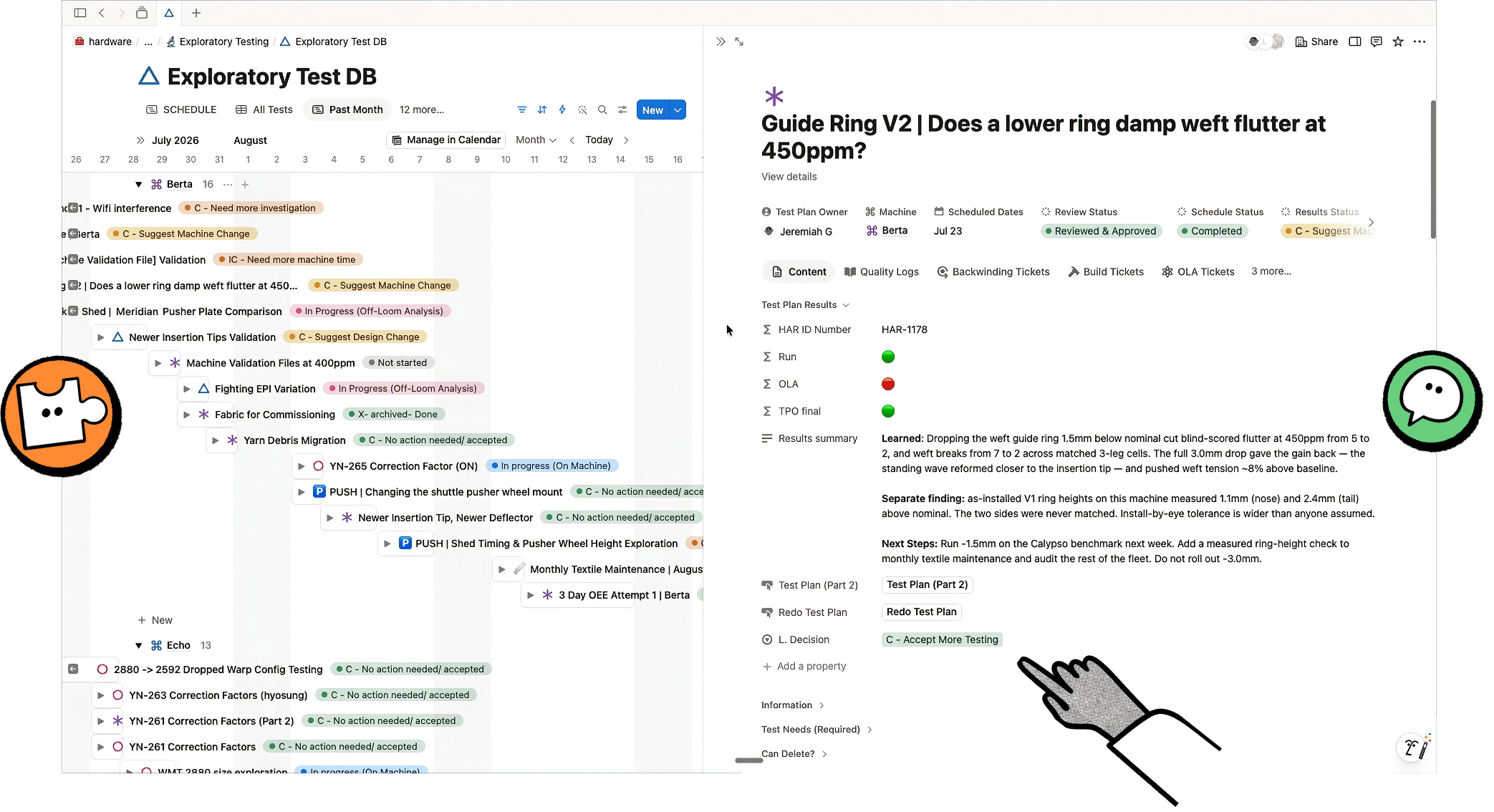
Machine scheduling is where production context turns into a decision: which test plans are ready, which materials and machine setups they require, what each run is meant to prove, and what the operator needs before the machine starts.
Every Wednesday, a Slack prompt asks teammates to share the test plans they want to discuss in the next scheduling meeting. When someone drops in a Notion link, a Custom Agent adds it to the meeting-prep page and fills in the context the meeting-lead needs: related test plans, past machine runs, yarn and material notes, quality logs, and project timelines.
Before the agent, the meeting lead had to collect each link, open each test plan, pull out the relevant details, and rebuild the prep doc by hand. “That could take up to an hour if there were ten test plans,” says Jeremiah. “Now she can sit down minutes before the meeting and have all of that information ready.”
The agent does not decide what runs on the machines. “We still want a human in the loop, making that final decision,” adds Jeremiah. The agent synthesizes the data so the team can spend less time rebuilding context and more time on trade-offs, risks, priorities, and the quality of the machines’ output.
Conversations become production context
A lot of Unspun’s best thinking happens in conversation: customer calls, partner updates, scheduling meetings, and internal debates about what to build next. AI Meeting Notes make sure those conversations are captured, so the team can stay present instead of worrying about notes or follow-up. As Jeremiah puts it: “No one’s worried about taking notes. No one’s worried about the action items.”
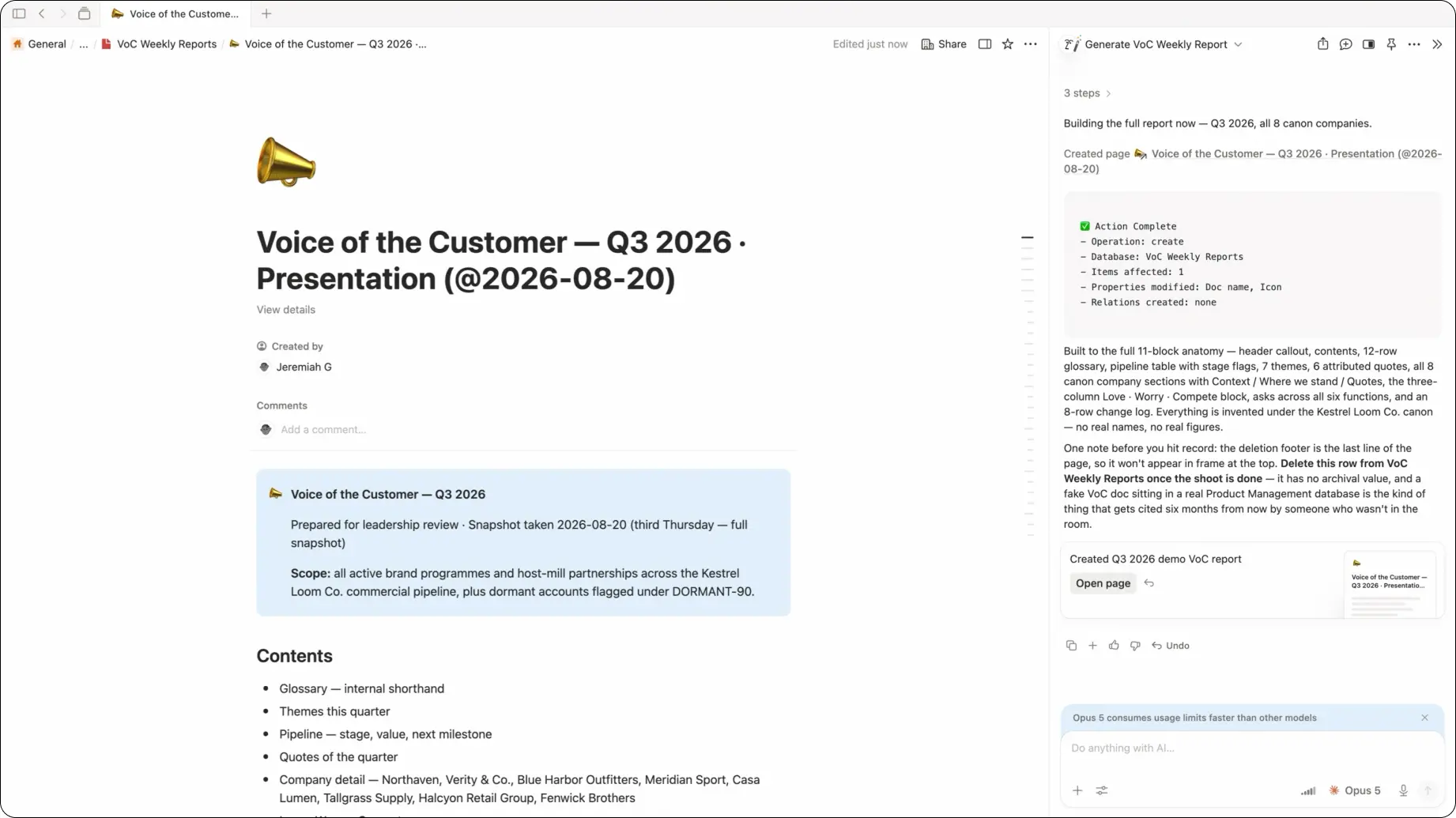
From there, a Custom Agent helps fold those conversations into context the rest of the company can use. Dan Robichaud-Carew, Head of Product Management, uses one to pull from call notes, weekly customer reports, Slack, sales channels, calendars, and Notion databases to maintain a Voice of Customer view: who’s the champion, what the customer has asked for, what quotes matter, what’s the plan, and what needs to happen next.
For Dan, the goal is to give more people across Unspun a clear view of “where we stand with customers,” what they’re looking for, and where the team needs to keep developing.
Everything goes into Notion. And all these conversations create this living hive mind of our company.

What comes next: an even tighter, self-improving loop between demand and production
For Unspun, the next step is making that loop even tighter: customer demand becomes requirements, requirements become test plans, test plans become machine runs, and each run teaches the team what to improve next.
The more this loop runs through Notion, the more useful each piece of context becomes: customer notes inform production decisions, machine runs create new learnings, and agents can help prepare the next round of work for a human to review. “It’s been very cool to see people across the team working with AI,” said Beth. “It’s made us stronger as a team.”